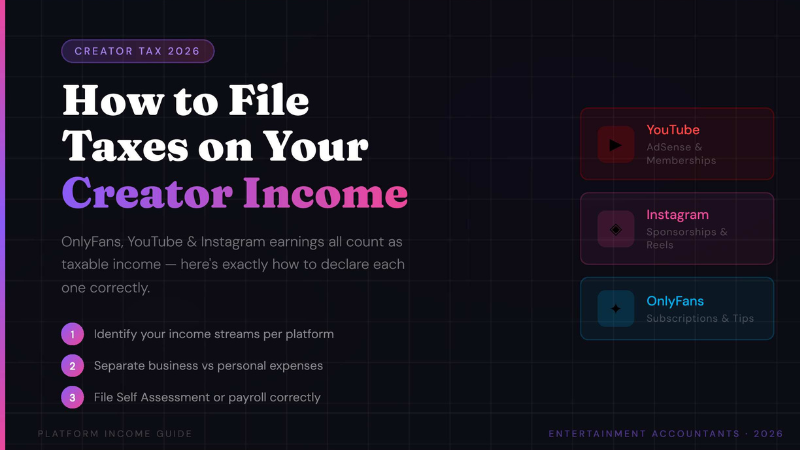
Earning from platforms like OnlyFans, YouTube, and Instagram is no longer a side hustle for many—it’s a full-time business. But with multiple income streams coming in, taxes can get confusing quickly. The IRS treats this income as self-employment, which means you’re responsible for reporting it correctly and paying taxes on time.
Here’s a clear breakdown of how to handle it the right way.
1. Understand What Counts as Taxable Income
All earnings from platforms like YouTube, Instagram, and OnlyFans are taxable. This includes:
- Ad revenue
- Subscriptions and tips
- Brand deals and sponsorships
- Affiliate income
- Gifts or free products (yes, even PR packages can be taxable)
Even if you don’t receive a tax form, you’re still required to report the income.
2. Watch for 1099 Forms
Most platforms or payment processors issue forms like 1099-NEC or 1099-K once you cross certain thresholds. These forms are also sent to the IRS.
Make sure the income you report matches or exceeds what’s on these forms. Underreporting is one of the most common reasons creators get flagged.
3. Deduct Your Business Expenses
You don’t pay tax on your total income—you pay tax on your profit. That’s why deductions matter.
Common deductions for creators include:
- Camera, lighting, and audio equipment
- Editing software and subscriptions
- Internet and phone (business portion only)
- Content props and production costs
- Paid ads and promotions
If the expense is directly related to creating content or earning income, it’s usually deductible.
4. Home Office Deduction
If you use a dedicated space at home for filming, editing, or managing your content, you may qualify for a home office deduction.
This can include part of your rent, utilities, and internet. The space must be used regularly and only for business to qualify.
5. Keep Track of Multiple Income Streams
Creators often earn from different platforms at the same time. It’s important to track each source clearly.
Use a simple system or accounting tool to record:
- Income by platform
- Expenses
- Payment dates
This makes tax filing easier and helps avoid mistakes.
6. Pay Quarterly Estimated Taxes
Since taxes aren’t automatically deducted, you’re expected to pay estimated taxes every quarter.
This includes:
- Income tax
- Self-employment tax (15.3%)
Missing these payments can lead to penalties, so it’s better to stay consistent throughout the year.
7. Separate Personal and Business Finances
One of the easiest ways to stay organized is to keep a separate bank account for your content income.
This helps you:
- Track expenses clearly
- Avoid mixing personal spending
- Prepare cleaner financial records
It also makes things easier if you ever need to show proof of income or expenses.
8. Don’t Ignore the QBI Deduction
Many creators qualify for the Qualified Business Income (QBI) deduction, which can reduce taxable income by up to 20%.
This depends on your total income and filing status, but it can lead to meaningful savings if applied correctly.
Final Thoughts
Handling taxes as a content creator isn’t just about filing once a year—it’s about staying organized all year long. When you track income properly, claim valid deductions, and make timely payments, you reduce stress and avoid problems with the IRS.
As your income grows, things can get more complex. That’s usually the point where getting professional help can save both time and money while keeping everything compliant.